
What 'kit' means here
- Modular
100 cm snap grid, zero unique walls
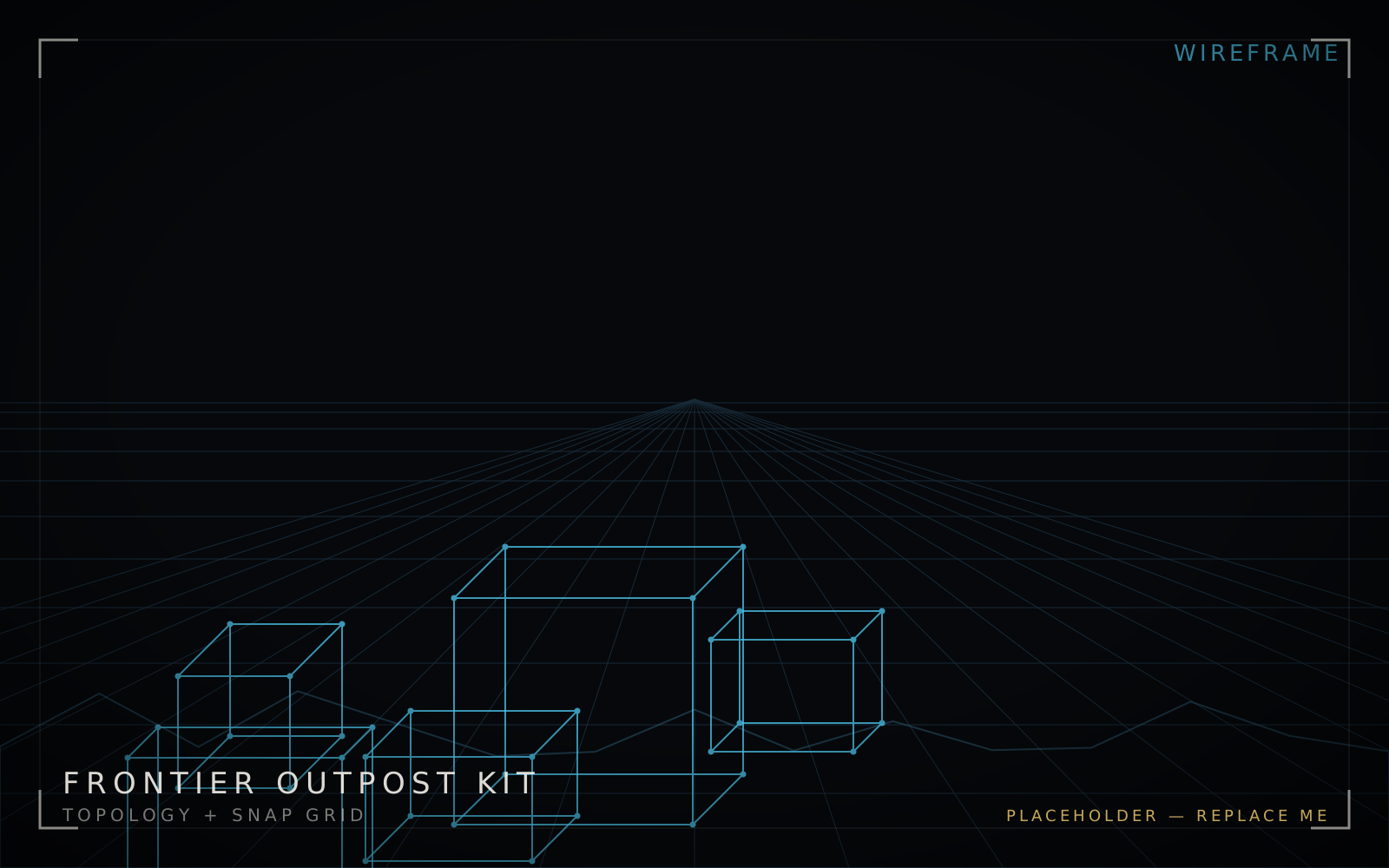
Walls, floors, trims and corners all share one metric grid, so level designers re-block a space without touching an artist.
- Texturing
Trim sheet + detail normal
One 4K trim carries every hard-surface edge; a 2K detail normal adds surface noise at close range without new UVs.
- Optimisation
4 LOD tiers, Nanite where it counts
Dense hero modules keep Nanite; small props use a hand-authored LOD chain so overdraw and silhouette both stay controlled.
- Delivery
Documented for the next artist
Naming, pivot rules, UV margins and import settings are written down — a kit nobody else can use isn't a kit.
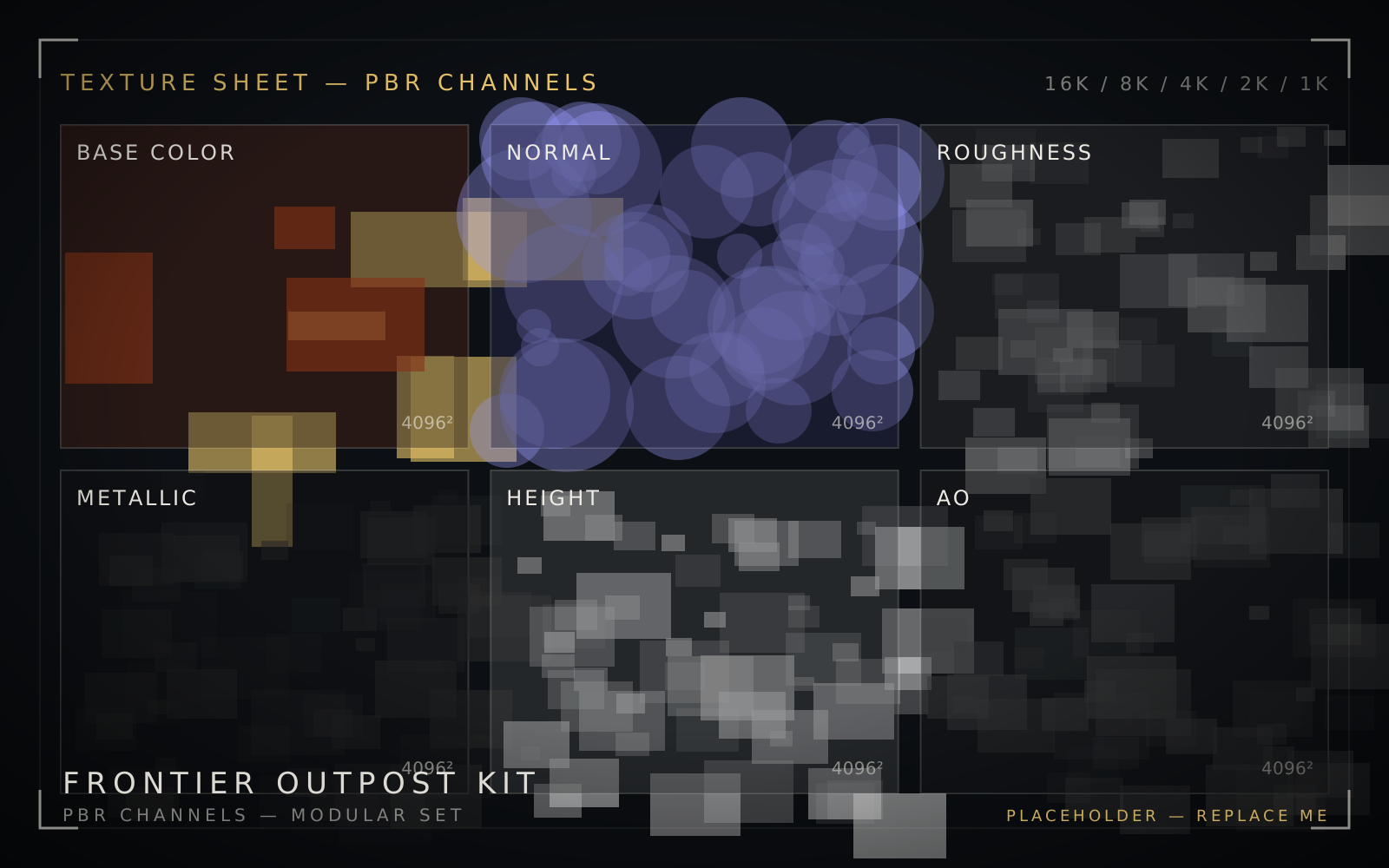
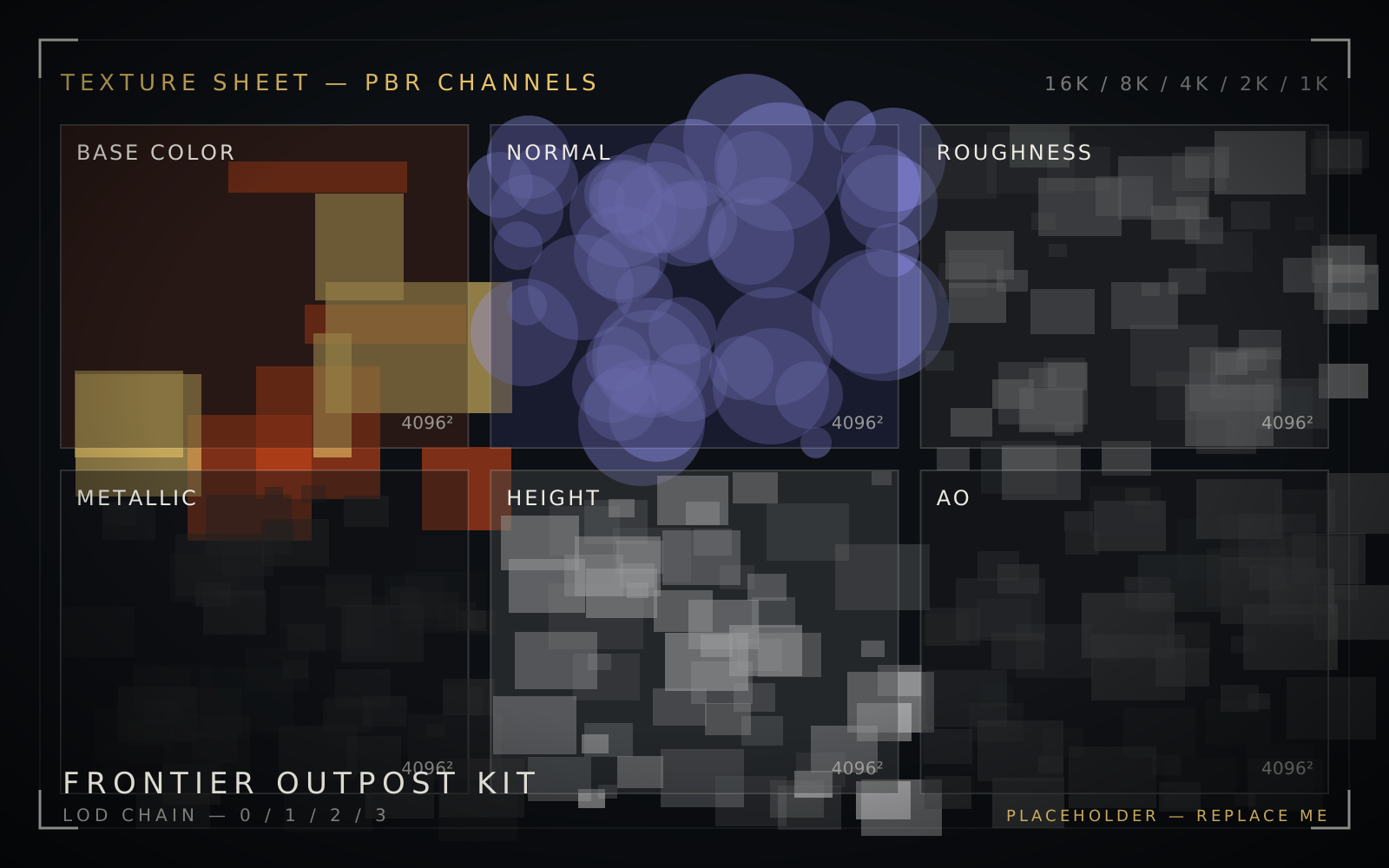
UVs, topology and material sheets
Unreal implementation — greybox to dressed

 GreyboxDressed + lit
Identical module layout — the kit was assembled in-engine by blockout, then dressed with prop variants.
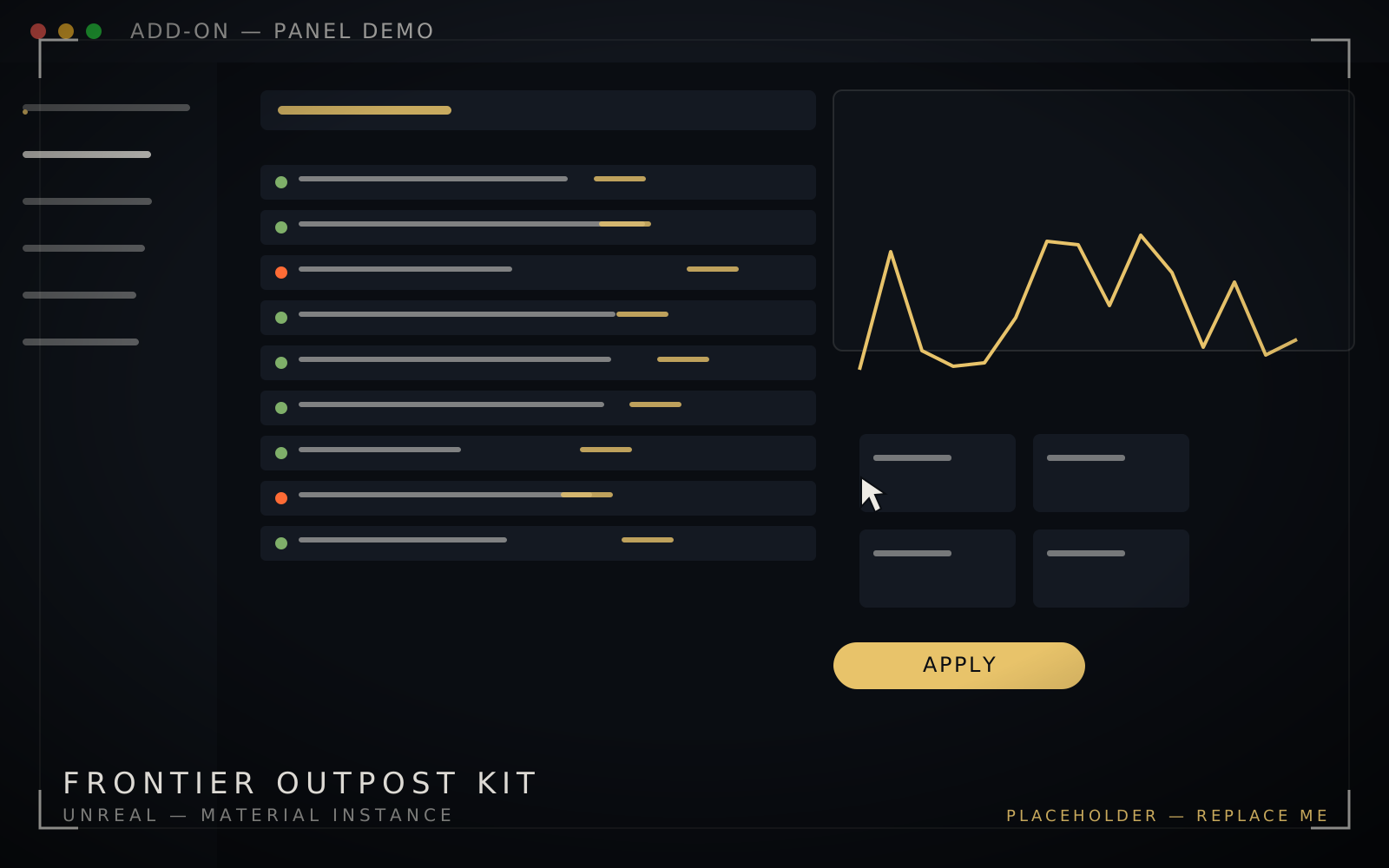
Material setup in Unreal
Every module shares one master material with a trim atlas, a detail normal and a vertex-color mask for wear. Variation comes from material instances and per-instance parameters, never from duplicated materials.
Vertex painting handles dust accumulation and wetness at runtime, which means the same wall works in an exterior shot and a covered interior without a second texture set. Texel density is locked at 512 px/m across the whole kit, so nothing visibly blurs when modules are mixed.
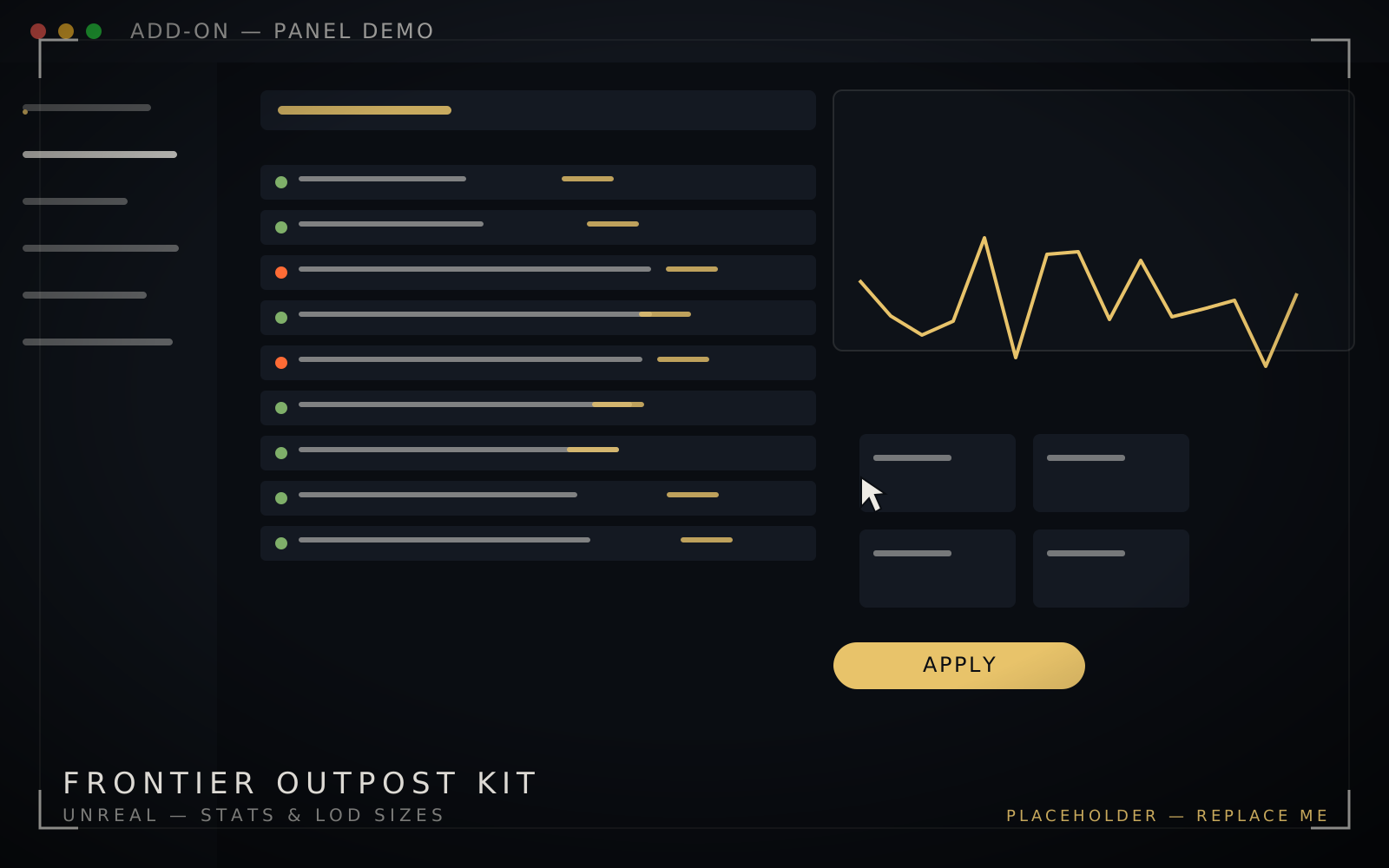
Engine implementation
Production breakdown
- 01
Greybox the rules first
Grid, ceiling heights and doorway spans were tested in engine before a single high-poly was made.
- 02
High → low, trim first
Trim sheet authored before modules, so every bevel decision already had a place to live in UV space.
- 03
Texture once, instance everywhere
Two texture sets cover the entire kit — variation is handled by instances and vertex masks.
- 04
Ship, then measure
Draw calls, texture memory and LOD screen sizes profiled on target hardware, then trimmed back.
- 05
Document the constraint
Pivot, naming and margin rules written into the README so new modules don't break the set.
- 06
Hand it over
Kit delivered with a sample room so the receiving artist can validate import without guesswork.